
Texas Civil Court Records
Texas civil court records are public court documents that cover lawsuits, contract disputes, property cases, and other civil matters filed in courts across the state. Each of the 254 counties maintains its own civil case files through the District Clerk and County Clerk offices. Many counties now let you search civil court records online through the statewide re:SearchTX portal or local court systems. For certified copies or full case files, you contact the clerk in the county where the case was filed. This guide walks you through how to find and access Texas civil court records at every level.
Texas Civil Court Records Overview
What Are Texas Civil Court Records
Civil court records in Texas cover a wide range of legal disputes between private parties, businesses, and government entities. These are not criminal cases. A civil case can be a contract dispute, a personal injury lawsuit, a property disagreement, a business partnership split, or a debt collection action. The court file for each civil case holds the original petition, any answers filed, motions, discovery orders, and the final judgment. Every step in a civil case creates a record that the clerk must keep on file.
The type of court depends on how much money is at stake and what kind of case it is. Justice of the Peace Courts handle civil claims up to $20,000 under Texas Government Code Chapter 27. County Courts at Law have jurisdiction over civil cases up to $200,000. District Courts take the biggest cases, those over $200,000, plus real property disputes, injunctions, and most class actions regardless of dollar amount. Each level of court keeps its own set of records. Knowing which court handled a case tells you where to look for the file.
Texas civil court records are generally open to the public. The state's common law right of access and court rules allow anyone to inspect case files at the courthouse. You don't have to be a party to the case or give a reason for your request. The clerk's office can pull up any case by party name or cause number.
Texas Court System Structure
Texas has one of the most complex court systems in the country. The state runs a two-track system for appeals, with the Texas Supreme Court handling civil appeals and the Court of Criminal Appeals handling criminal matters. Below those courts are 14 intermediate Courts of Appeals spread geographically across the state. Each court of appeals handles civil and criminal cases from district and county courts in its region.
At the trial level, Texas has three main tiers. Justice of the Peace Courts sit at the bottom and handle small claims up to $20,000 plus eviction cases and Class C misdemeanors. County Courts and County Courts at Law come next, covering civil cases up to $200,000, misdemeanor criminal cases, and probate matters. District Courts sit at the top of the trial court system. They handle the major civil cases, all felonies, family law, and any case where the amount in controversy exceeds $200,000. Texas has more than 450 District Courts across the state. Each county has at least one. Larger counties like Harris, Dallas, and Tarrant have dozens of district courts handling specialized matters like family law, civil litigation, and criminal cases.
The Texas Judicial Branch website at txcourts.gov is the central hub for court information statewide. It has the judicial directory, court rules, statistical reports, and links to each court system. The Office of Court Administration manages the data systems and publishes annual reports on court activity across all 254 counties.
The Texas Judicial Branch homepage at txcourts.gov gives access to the Supreme Court, all Courts of Appeals, and trial court resources across the state.

The Texas Judicial Branch site links to all 254 county courts, rules of procedure, and judicial directories used to find civil case filings statewide.
How to Search Texas Civil Court Records
The fastest way to search civil court records in Texas is through re:SearchTX, the official statewide case search portal. This system pulls case information from participating courts across all 254 counties. You can search by party name, attorney name, cause number, case type, or date range. Basic case index information is free for the public. The system shows party names, filing dates, case status, court, and docket entries. Some document images require registration or fees. Data refreshes nightly, so it's current through the previous business day.
The re:SearchTX portal at research.txcourts.gov gives you access to civil case information from courts across Texas in one place.
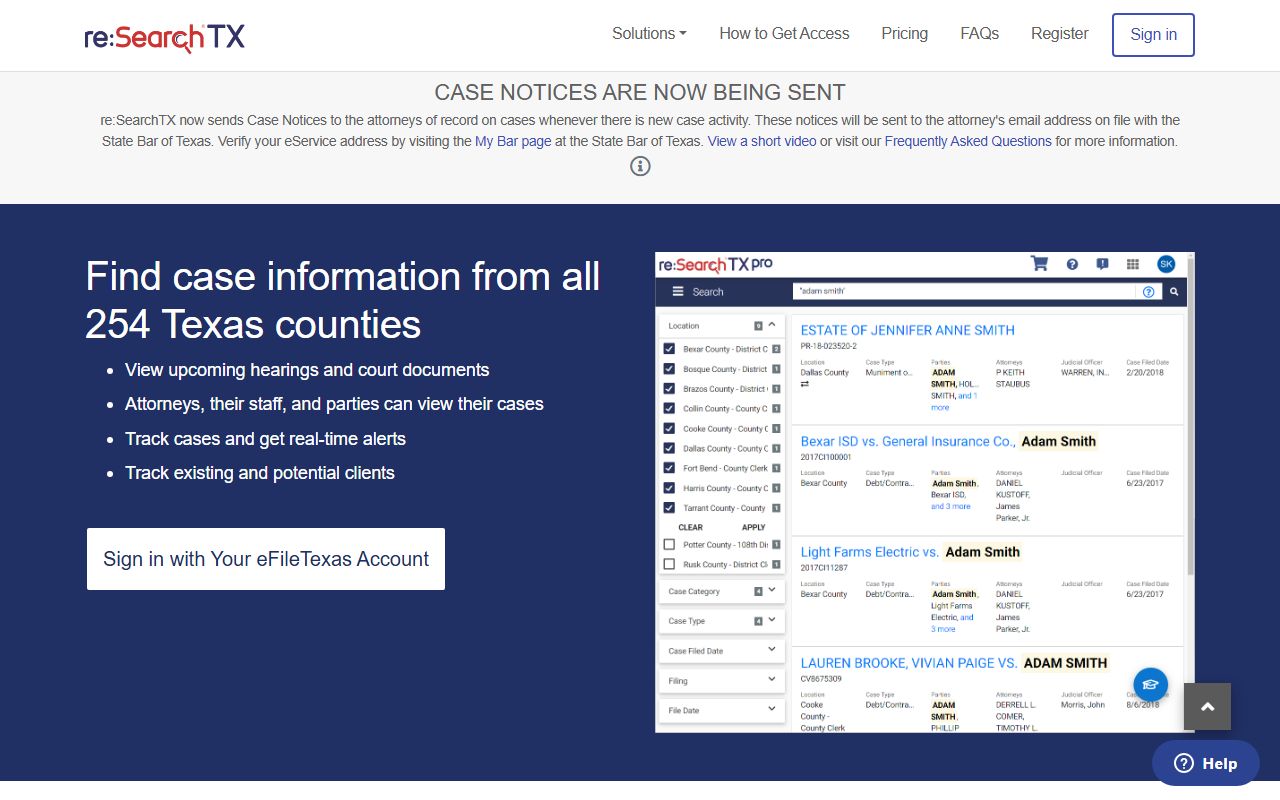
re:SearchTX covers District Courts, County Courts at Law, and Appellate Courts in most Texas counties, with coverage growing each year.
Not all courts are on re:SearchTX. Some larger counties like Harris, Dallas, Bexar, and Travis run their own online search portals. You can go directly to those county portals and search by name or cause number. The Texas Judicial Branch site has a directory of all county clerks and district clerks with links to their websites. If a county doesn't have an online portal, you contact the clerk's office directly and ask about their search process.
To search civil court records in Texas, you generally need the full name of at least one party, the county where the case was filed, and the approximate year if you're looking for older records. A cause number speeds up any search. Many clerks can also search by attorney name if you know who represented one of the parties.
Statewide Civil Court Search Tools
Texas offers several official online systems for accessing civil court information. Each system covers a different part of the court hierarchy. Knowing which tool to use saves time.
The Texas Supreme Court case search lets you look up civil appeals that reached the state's highest court. You can search by attorney bar number, party name, or case number. The system shows case status, briefs, opinions, and oral argument dates. This is where you go for the most significant civil cases in Texas, the ones that set legal precedent for courts statewide.
The Texas Supreme Court case search portal provides access to appellate civil records and opinions from the state's highest court.
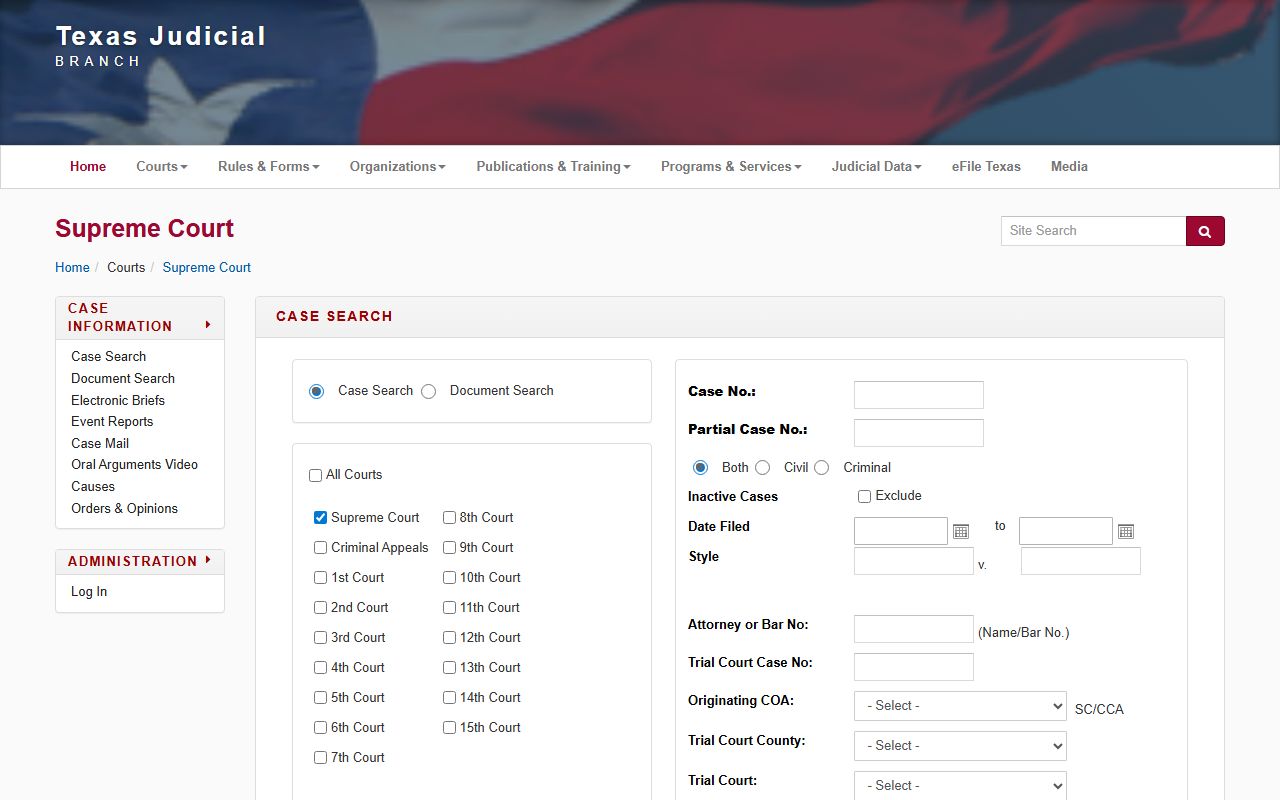
Texas Supreme Court records include briefs, opinions, orders, and hearing schedules for civil cases appealed from lower courts across all 254 counties.
The eFileTexas system is the official electronic filing platform for Texas courts. Attorneys are required to e-file in most civil cases. Self-represented litigants can use the system too. Documents filed electronically are timestamped and appear in the court's docket. Once filed, documents become part of the public court record subject to access rules. The system supports all court levels from Justice of the Peace through the Supreme Court.
For historical civil court records going back to the Republic of Texas era, the Texas State Library and Archives Commission holds records dating before 1900. These include early district court files, land disputes, and probate records from before electronic systems existed.

The Texas State Library at tsl.texas.gov preserves historical court records including civil case files, probate records, and land title disputes from the 1800s.
Federal Civil Court Records in Texas
Texas is split into four federal judicial districts: Northern, Southern, Eastern, and Western. Federal civil cases involve matters like federal questions, cases between residents of different states where more than $75,000 is at stake, bankruptcy, intellectual property, and cases against federal agencies. These records are not at the county courthouse. They're at the federal district court in your region.
You access federal civil court records through PACER, which stands for Public Access to Court Electronic Records. Registration is free. You pay per page to view documents, currently $0.10 per page, but most users get a fee cap that limits charges to $30 per quarter. PACER covers all four Texas federal districts and lets you search by party name, case number, or attorney. The Northern District in Dallas handles cases from Dallas, Fort Worth, Amarillo, Lubbock, and surrounding areas. The Southern District in Houston covers Houston, Galveston, Victoria, Brownsville, Corpus Christi, and Laredo. The Eastern District at Tyler covers east Texas. The Western District in Austin handles Austin, San Antonio, El Paso, Waco, and west Texas.
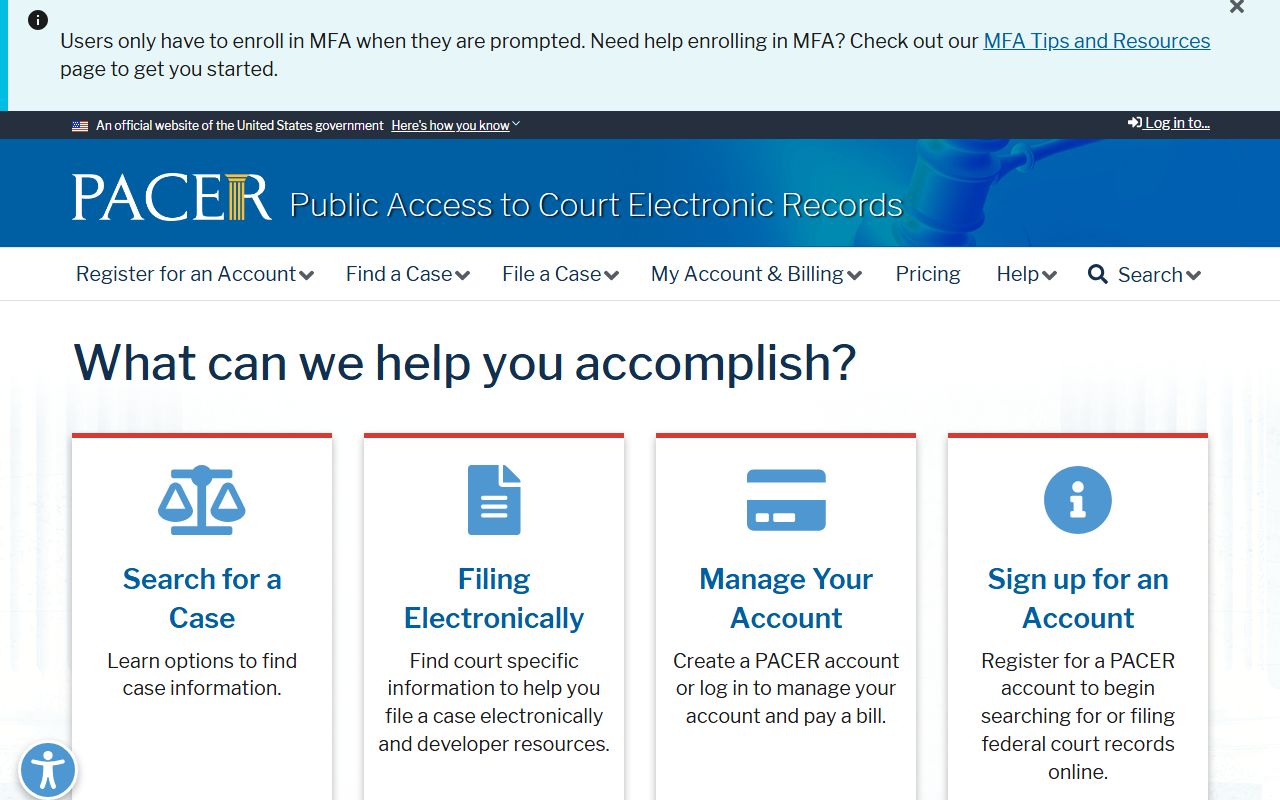
PACER at pacer.uscourts.gov provides access to all four Texas federal district courts, covering civil litigation in federal courts across the state.
How to Get Copies of Civil Court Records
To get copies of a civil court record in Texas, go to the clerk in the county where the case was filed. For District Court civil cases, that's the District Clerk's office. For County Court civil cases, it's the County Clerk. Both offices can pull files by party name or cause number.
You can visit in person during business hours, usually Monday through Friday, 8 AM to 5 PM in most counties. Some clerks accept mail requests with a written description of the records you need plus payment. Plain copies cost $1 per page in most Texas counties. Certified copies run higher, typically $2 per page plus a certification fee that varies by county. Certified copies are needed when you have to prove the content of a court record to another agency or institution.
The re:SearchTX portal lets you view basic case information and some document images online without going to the courthouse. Registration is required for document access beyond the basic index. The system is useful for checking whether a case exists, getting a cause number, or reviewing docket entries before you visit in person.
Note: Some civil case documents may be sealed by court order. Financial records, certain business documents, and materials involving minors can have restricted access. The clerk will tell you if any part of a file is sealed when you request it.
Public Access to Texas Civil Court Records
Texas civil court records are open to the public under the state's common law right of access and court rules. The Texas Public Information Act under Government Code Chapter 552 does not apply directly to court records. Courts are governed by their own rules, particularly Rule 12 of the Texas Rules of Judicial Administration for administrative records and the common law right of inspection for case records.
Under the common law standard, court records are presumed open unless a specific statute or court order seals them. Anyone can walk into a clerk's office and ask to inspect a civil case file. You don't need to be a party to the case. You don't need to explain why you want to see it. The clerk can ask you to fill out a form but cannot deny access without a legal basis. If a judge seals a record, the clerk follows that order.
The Texas Legislature's statute database at statutes.capitol.texas.gov has the laws governing court records access, including Government Code Chapter 51 on court administration and Local Government Code Chapter 191 on county clerk records. These statutes set the framework for fees, record retention, and public access rules.
The Texas County and District Clerks Association represents the clerks who manage these records and provides guidance on records management best practices statewide.
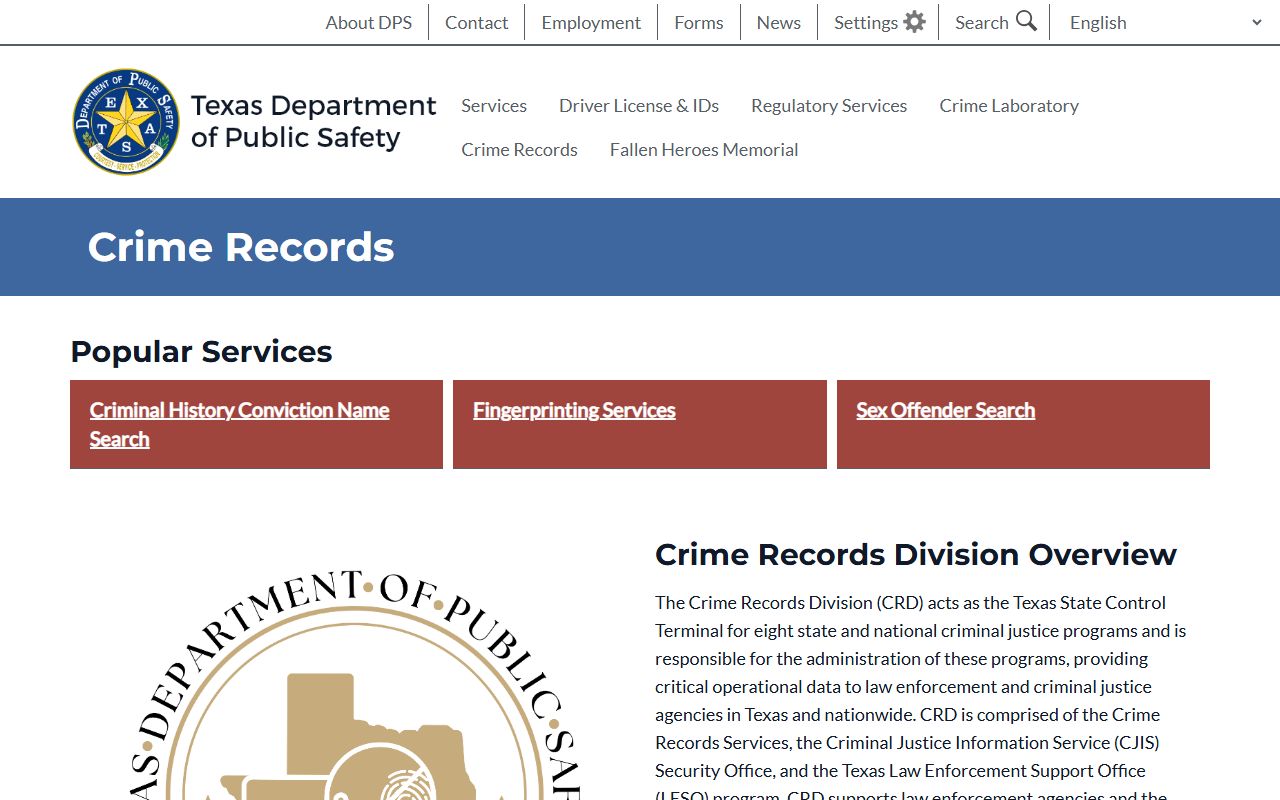
The Texas DPS at dps.texas.gov provides criminal history records that complement civil court data when researching individuals involved in litigation.
Legal Resources for Texas Civil Cases
The State Bar of Texas runs a lawyer referral service at (800) 252-9690. You can also search their online attorney directory to find a civil litigation attorney in any county. Attorneys licensed in Texas are listed with their contact info and practice areas.
Texas has several legal aid organizations that assist low-income individuals with civil legal matters. Lone Star Legal Aid covers east and southeast Texas, including the Houston area, and can be reached at (800) 733-8394. Texas RioGrande Legal Aid handles cases in central, south, and west Texas at (888) 988-9996. Legal Aid of NorthWest Texas covers the Dallas-Fort Worth region and north Texas. TexasLawHelp.org has self-help guides, forms, and step-by-step instructions for people handling their own civil matters without an attorney.
Court forms for civil cases are available through the Texas Courts website. The site has standardized forms for common civil filings. The eFileTexas system also provides form guidance for electronic filers. Many county courthouses have a self-help center where staff can point you to the right forms, though they cannot give legal advice.
Browse Texas Civil Court Records by County
Each of Texas's 254 counties maintains its own civil court records through the District Clerk and County Clerk offices. Select a county to find local contact information, online search tools, and resources for civil court records in that area.
Civil Court Records in Major Texas Cities
Residents of major Texas cities file civil cases at the District Court or County Court in their county. Select a city to find out which court handles civil records for that area, along with contact info and local resources.